

1970 Mustang Boss 302
This is your Services Page. It's a great opportunity to provide information about the services you provide. Double click on the text box to start editing your content and make sure to add all the relevant details you want to share with site visitors.
The 1970 Mustang Boss 302 and Trans Am Racing: A Legacy of Performance and Power
The late 1960s were a golden era for American muscle cars, a time when automotive manufacturers competed fiercely on the streets and the racetrack. Among the many legendary cars from this period, the 1970 Mustang Boss 302 stands out as a remarkable blend of performance, engineering, and racing heritage. Born from Ford's ambition to dominate the Trans Am racing series, the Boss 302 not only achieved success on the track but also left an indelible mark on the history of American muscle cars.
The Genesis of the Boss 302
The Boss 302 was conceived during a time when the Trans Am racing series was at its peak. The Trans Am series, officially known as the SCCA Trans American Sedan Championship, was a road racing series that attracted major manufacturers like Ford, Chevrolet, Pontiac, and Dodge. The competition was intense, with each manufacturer striving to outdo the others in both performance and sales.
Ford had already made a significant impact on the racing world with its Shelby Mustangs, but the company wanted to take its success to the next level. The Boss 302 was designed specifically to compete in the Trans Am series, where engine displacement was limited to 5.0 liters (305 cubic inches). This regulation required manufacturers to develop high-revving, small-block engines that could deliver exceptional power and performance.
The Engine and Performance
At the heart of the 1970 Mustang Boss 302 was its namesake engine, a 302 cubic inch V8. This engine was a marvel of engineering, combining the high-revving nature of the small-block V8 with advanced components to maximize performance. The Boss 302 engine featured a forged steel crankshaft, four-bolt main bearing caps, and high-compression pistons. The cylinder heads were designed with large, canted valves and a unique combustion chamber shape to improve airflow and combustion efficiency.
One of the standout features of the Boss 302 engine was its solid-lifter camshaft, which allowed the engine to rev higher and produce more power. The result was an engine that could deliver a factory-rated 290 horsepower at 5,800 RPM and 290 lb-ft of torque at 4,300 RPM. However, these numbers were conservative, and the actual output was believed to be closer to 330 horsepower, making the Boss 302 a formidable performer both on the street and the track.
Chassis and Handling
To complement its powerful engine, the Boss 302 featured a suspension system designed for high-performance driving. The car was equipped with heavy-duty front and rear springs, larger sway bars, and staggered rear shocks to reduce axle hop during hard acceleration. The chassis was reinforced with additional bracing to improve rigidity and handling.
The Boss 302 also came with quick-ratio steering and power-assisted front disc brakes, providing drivers with precise control and stopping power. The car rode on F60x15 Goodyear Polyglas tires mounted on Magnum 500 wheels, which offered excellent grip and stability.
These performance enhancements made the Boss 302 a joy to drive, whether on winding roads or the racetrack. The car's balanced handling and responsive steering allowed drivers to push it to its limits with confidence, making it a favorite among enthusiasts and racers alike.
Design and Aesthetics
The 1970 Mustang Boss 302 was not only a performer but also a visual stunner. Its aggressive design was characterized by a long hood, short deck, and a wide stance. The car featured bold graphics, including "Boss 302" decals on the fenders and a distinctive blacked-out hood with functional hood scoops. The rear deck spoiler and front chin spoiler added to the car's aerodynamic profile and muscular appearance.
Inside, the Boss 302 offered a driver-focused cockpit with high-back bucket seats, a Hurst shifter, and a sport steering wheel. The interior was available in various color combinations, allowing buyers to personalize their cars to their tastes. The overall design of the Boss 302 reflected its racing pedigree and performance capabilities, making it an icon of American muscle car design.
The Boss 302 in Trans Am Racing
The true legacy of the 1970 Mustang Boss 302 is inseparable from its success in the Trans Am racing series. Ford's commitment to winning the Trans Am championship was evident in the extensive development and testing of the Boss 302. The car was prepared by Ford's racing division and fielded by top teams, including Bud Moore Engineering.
The 1970 Trans Am season was highly competitive, with Ford going head-to-head against Chevrolet's Camaro Z/28, Pontiac's Firebird, and other formidable contenders. The Boss 302, driven by accomplished racers like Parnelli Jones and George Follmer, proved to be a dominant force on the track.
Parnelli Jones, in particular, played a crucial role in the success of the Boss 302. His skill and determination behind the wheel helped Ford secure the 1970 Trans Am championship. Jones' aggressive driving style and ability to extract the maximum performance from the Boss 302 made him a fan favorite and a key figure in the car's racing legacy.
The Impact of the Boss 302
The success of the Boss 302 in Trans Am racing had a profound impact on Ford's reputation and the Mustang's status as a performance car. The victories on the track translated into increased sales and a stronger brand image for Ford. The Boss 302 became a symbol of American engineering excellence and a testament to the company's commitment to performance.
For enthusiasts and collectors, the Boss 302 remains one of the most desirable Mustangs ever produced. Its combination of racing pedigree, powerful performance, and distinctive design makes it a sought-after classic car. The limited production run of the Boss 302 adds to its allure, as finding an original, well-preserved example is a rare and valuable discovery.
Restoration and Preservation
Given the Boss 302's historical significance and rarity, restoration and preservation efforts are essential to maintaining its legacy. Enthusiasts and collectors often go to great lengths to restore their Boss 302s to their original condition, ensuring that every detail is accurate and authentic.
Restoration projects can be both challenging and rewarding. Sourcing original parts, matching the correct paint colors, and replicating the factory specifications require meticulous attention to detail. For those dedicated to preserving the Boss 302, the effort is well worth it, as a fully restored car not only looks stunning but also performs as it did when it first left the factory.
Preservation also involves maintaining the historical documentation associated with the Boss 302. Original build sheets, sales invoices, and promotional materials are valuable artifacts that provide insight into the car's history and provenance. These documents help establish the authenticity of a Boss 302 and contribute to its overall value and historical significance.
The Boss 302 in Modern Culture
The 1970 Mustang Boss 302 continues to hold a special place in modern automotive culture. It is celebrated at car shows, featured in automotive magazines, and often the subject of discussions among enthusiasts. Its distinctive appearance and storied racing history make it a favorite among those who appreciate classic American muscle cars.
In recent years, the Boss 302 has also gained recognition beyond the automotive community. It has appeared in various forms of media, including movies, television shows, and video games. This broader cultural presence has helped introduce the Boss 302 to new generations of fans, ensuring that its legacy endures.
Summing Up the Boss 302
The 1970 Mustang Boss 302 is more than just a car; it is a symbol of an era defined by performance, power, and racing excellence. Its creation was driven by Ford's ambition to dominate the Trans Am racing series, and its success on the track cemented its place in automotive history. With its powerful engine, advanced suspension, and aggressive design, the Boss 302 remains a testament to the ingenuity and passion that defined the muscle car era.
As we look back on the Boss 302's history, we are reminded of the thrill and excitement that these cars brought to the road and the racetrack. The Boss 302's distinctive style and formidable performance ensure that it will always be remembered as one of the most iconic muscle cars ever produced. For those fortunate enough to own one, the Boss 302 is not just a vehicle; it is a piece of American automotive history, a cherished treasure that continues to inspire and excite.
In the annals of muscle car history, the 1970 Mustang Boss 302 stands as a shining example of what can be achieved when engineering excellence meets racing ambition. Its legacy endures, a reminder of a time when American automakers pushed the boundaries of performance and created legends that would stand the test of time.
Work In Progress

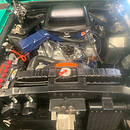
Temp Sender
Temp Sender installed on the car does not read the correct ohms and seeking original replacement